http://www.tomrobinsonphotography.com/images/romania/_DSC0916.jpg
Brilliant photo. I love it, which is why it's on this page.


Today I was doing some more iResearch -- um, research, I mean -- including an entertaining click-through on the Japanese Apple site, which led me to this:

Tell me. Does anything seem eerily ... familiar ... about those guys?
Take a gander at the Japanese PC/Mac commercials here. Quit yer whining that you don't know Japanese. Trust me, you'll get it. And you'll be simultaneously amused and weirded out.


 Sometimes I feel like Wilma Flinstone. Not because I feel like a sexy pre-historic red-head... but because Chris' newest hobby/sport:
  Alright, I went today to the dentist who as really nice (Dr. Dean) and she said that my teeth were in perfectly good shape, minus the two wisdom teeth coming in. I just went for a routine cleaning. But now I've got a consultation with an orthodontic sergon to take my two wisdom teeth out (yes, I only have two... I must not be that smart). I'm nervous, but it's not gonna happen for a while, so I'm actually not bad. I have a consultation when we get back from Ok, July 7th. Fun, fun, fun.


| Which Disney Princess Do You Relate Best To? | |
  Snow White YOU ARE SNOW WHITE!!!! | |
| Take The Quiz Now! | Quizzes by myYearbook.com |

 A car crash in West Yarmouth led police to the discovery of a filthy car filled to the brim with trash and rubbish.
Socrates felt so passionately about the value of self-examination that he closely examined not only his own beliefs and values but those of others as well. More precisely, through his relentless questioning, he forced people to examine their own beliefs. He saw the citizens of his beloved Athens sleepwalking through life, living only for money, power, and fame, so he became famous trying to help them.

The ultimate irony of Ockham’s razor may be that some have used it to prove God is unnecessary to the explanation of the universe, an idea Ockham the Franciscan priest would reject.

Whereas Rousseau said, “Man is born free, and he is everywhere in chains,” Hobbes believed we find ourselves living a savage, impossible life without education and the protection of the state. Human nature is bad: we’ll prey on one another in the most vicious ways. No doubt the state imposes on our liberty in an overwhelming way. Yet Hobbes’ claim was that these very chains were absolutely crucial in protecting us from one another.

On the heels of believing in himself, Descartes asked, What am I? His answer: a thinking thing (res cogitans) as opposed to a physical thing extended in three-dimensional space (res extensa). So, based on this line, Descartes knew he existed, though he wasn’t sure if he had a body. It’s a philosophical cliff-hanger; you’ll have to read Meditations to find out how it ends.

Though he never put the question in the exact words of the famous quotation, Berkeley would say that if a tree fell in the forest and there was no one (not even a squirrel) there to hear it, not only would it not make a sound, but there would be no tree.
The good news is, according to Berkeley, that the mind of God always perceives everything. So the tree will always make a sound, and there’s no need to worry about blipping out of existence if you fall asleep in a room by yourself.

The principle of sufficient reason holds that for everything, there must be sufficient reason why it exists. And according to Leibniz the only sufficient reason for the world we live in is that God created it as the best possible universe. God could have created a universe in which no one ever did wrong, in which there was no human evil, but that would require humans to be deprived of the gift of free wills and thus would not be the best possible world.

Marx (1818 – 1883) found Hegel’s apt description to be indicative of the problem with philosophy and responded, “the philosophers have only interpreted the world differently, what matters is to change it.”

The final stage, the religious stage, requires passionate, subjective belief rather than objective proof, in the paradoxical and the absurd. So, what’s the absurd? That which Christianity asks us to accept as true, that God became man born of a virgin, suffered, died and was resurrected.
Abraham was the ultimate “knight of faith” according to Kierkegaard. Without doubt there is no faith, and so in a state of “fear and trembling” Abraham was willing to break the universal moral law against murder by agreeing to kill his own son, Isaac. God rewarded Abraham’s faith by providing a ram in place of Isaac for the sacrifice. Faith has its rewards, but it isn’t rational. It’s beyond reason. As Blaise Pascal said, “The heart has its reason which reason does not know.”

Nevertheless, Nietzsche endorsed the words. “God is dead” is often mistaken as a statement of atheism. It is not, though Nietzsche himself was an atheist. “Dead” is metaphorical in this context, meaning belief in the God of Christianity is worn out, past its prime, and on the decline. God is lost as the center of life and the source of values. Nietzsche’s madman noted that himself came too soon. No doubt Nietzsche, too, thought he was ahead of his time in heralding this news.

For Camus, the absurd hero is Sisyphus, a man from Greek mythology who is condemned by the gods for eternity to roll up a stone up a hill only to have it fall back again as it reaches the top. For Camus, Sisyphus typified all human beings: we must find a meaning in a world that is unresponsive or even hostile to us. Sisyphus, Camus believed, affirms life, choosing to go back down the hill and push the rock again each time. Camus wrote: “The struggle itself toward the heights is enough to fill a man’s
heart. One must imagine Sisyphus happy.”

In modern times Henri Bergson (1859 – 1941) described time as a process that is experienced. An hour waiting in line is different from an hour at play. Today contemporary physics lends credence to process philosophy with the realization that even apparently stable objects, like marble statues, are actually buzzing bunches of electrons and other subatomic particles deep down.
If you fumble with a philosopher’s name, nothing you say afterward will sound credible. So, learn to pronounce these names correctly, then start worrying about their ideas.
(George) Berkeley is properly pronounced like Charles Barkley (bark-lee). This name is commonly mispronounced “burk-lee” like Berkeley, California, which, ironically, is named after George Berkeley.
(Friedrich) Nietzsche is commonly mispronounced as “nee-chee.” The correct pronunciation is “nee-ch-ya” and rhymes with “pleased ta meetchya.” “Pleased ta meetchya, Neechya.” Say it!
Lao-tzu (born ca. 604 BCE) is spelled several different ways in English transliteration from the Chinese. But no matter how you spell it, the proper way to pronounce it is “lau” (sounds like “ouch”)-“dsuh”. The stress goes on the first syllable.
(Charles Sanders) Pierce (1839 – 1914) is commonly mispronounced as “peer-s.” The correct pronunciation is “purse,” which is somewhat funny because Pierce rarely had a penny in his purse. Oddly, Pierce took his middle name, Sanders, as an anglicized form of Santiago, or “St. James,” in honor of a fellow pragmatist, William James (1842 – 1910), who helped him out financially.
(Ludwig) Wittgenstein (1889 – 1951) is a name that demands authentic German pronunciation, and there are plenty of ways to slaughter it. Here’s one that embodies all of them, “wit-jen-steen.” The correct pronunciation is “vit” (rhymes with bit)-“ghen” (rhymes with ken)-“shtine.” The first name is pronounced “lude-vig.” If you think it’s hard to pronounce his name, try reading his Tractatus.
 By Will Dunham
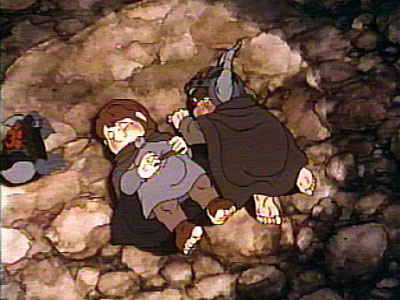
WASHINGTON (Reuters) - The tiny woman dubbed the Hobbit who lived 18,000 years ago on a remote Indonesian island deserves to be deemed a new human species and not a deformed modern human as skeptics assert, researchers said on Monday.
In the latest salvo in a heated scientific shootout, an international team led by Florida State University anthropologist Dean Falk compared the Hobbit's skull to those of nine people with microcephaly, a rare condition in which the head is abnormally small due to improper brain development.
They concluded the 3-foot-tall (1-meter) adult woman had a highly evolved brain, unlike that of a microcephalic person, confirming she belongs to the proposed extinct species Homo floresiensis, closely related to modern Homo sapiens.
"Lo and behold, it doesn't look anything like a microcephalic. In fact, it's antithetical," Falk said in an interview, rebutting scientists like primatologist Robert Martin of the Field Museum in Chicago who suggest the skull came from a person with microcephaly.
A previous study by Falk had been criticized because it compared the Hobbit, with a brain a third the size of modern people, to just a single microcephalic skull.
Martin remained unconvinced. "My gut feeling is what they (Falk's team) did is just played around with the measurements until they got something that suited them," Martin said.
Martin said the new study was flawed, questioned whether Falk's team knew enough about microcephaly and insisted the question of a separate species is unresolved.The study appears in the Proceedings of the National Academy of Sciences. Michael Morwood, part of the group that discovered the remains, is a co-author.
WONDROUS PLACE
Scientists in 2003 found the bones in a cave on the island of Flores east of Bali, contending they were a previously unknown species living at a time the species Homo sapiens was thought to have been the world's only human inhabitant.
These little people -- bones from several other individuals also were found -- lived in a wondrous place populated by strange animals like pygmy elephants and large rodents. In this isolated locale, evolutionary forces stemming from limited resources may have pushed some inhabitants toward dwarfism and others toward gigantism.
Tools and evidence of fire were found near the bones of the adult female, dubbed the Hobbit after the small people in the writings of J.R.R. Tolkien.
Falk's team compared three-dimensional, computer-generated reconstructions of the brain of the Hobbit to those of nine microcephalics from all over the world and 10 normal people.
Two features in the frontal lobes and a structure called the cerebellum separated the two groups, with the Flores woman fitting in with normal humans, not microcephalics, the study found. But she was unlike modern humans in four other features distinguishing her from Homo sapiens, crying out for recognition as a separate species, the researchers said.
Falk said the origin of this new species is now the key question, adding she is open to the possibility it descended from Australopithecenes, ape-like human ancestors, or was a dwarf form of the extinct species Homo erectus.
Martin said it is possible it is a new species. "But the other strong possibility is that this is actually just a pathological modern human," Martin added.
"At the end of the day, hopefully, the truth will come out," Martin added. "And I'm not mad enough to think I'm right about everything. But there are ways of doing it and ways of not doing it."
© Reuters 2007. All Rights Reserved.
IN a new twist in Rio de Janeiro's crime files, scissor-wielding thieves have clipped off the long, flowing locks of a 22-year-old Brazilian woman as she rode in a city bus.
"We got on at the same stop and they sat behind me,''"sales assistant Mirna Marchetti says.
"Then all of a sudden I felt someone pulling my hair. My friend tried to help me but they just cut it off, right at the base.''
Marchetti's hair was dark, straight and reached down to her waist.
Police suspect the thieves hope to sell the hair to a hairdresser or beauty salon, which can charge more than 500 reais ($320) for top-quality hair extensions.
"This is a new kind of crime," said a police officer at the station where the report was filed.
"They really did mean to steal her hair."